
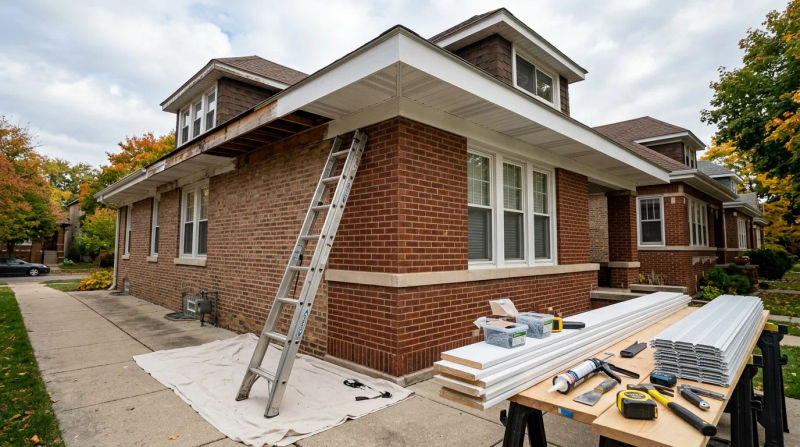
As a Senior Roofing Project Manager with over 15 years of experience here in Chicago, I can tell you that the first question on nearly every homeowner's mind is, "What's this going to cost?" It's a fair question, especially when it comes to something as critical as the edge of your roof. Your soffit and fascia are more than just trim; they are your home's first line of defense against pests, moisture, and the harsh Midwest weather. This is particularly true in the fall, when we start seeing the first signs of trouble - peeling paint, dark stains, or soft spots - and still have a window to act before snow and ice make everything more complicated.
My goal here is to give you a transparent, no-nonsense guide to understanding the potential costs for soffit and fascia repair. We'll break down the numbers, explore what drives prices up or down, and empower you to make an informed decision for your home's long-term health.
Average Costs in Chicago
Providing a flat rate for roof-edge carpentry is impossible without a thorough inspection, but we can certainly establish realistic budget ranges based on typical projects we see across the Chicago area. Prices can vary significantly based on the scope of work.
Here's a general breakdown of what homeowners can expect:
- Minor Repairs (Small Sections): For isolated damage, like a single cracked board or a small area of rot affecting 5-10 feet, you might expect a soffit fascia repair cost to be between $500 and $1,200. This typically involves removing the damaged section, inspecting the underlying wood (rafter tails), replacing the board, and then caulking and painting to match.
- Sectional Replacement (One Side of a Home): If an entire side of your house shows damage - often due to a clogged gutter or improper flashing - the cost will be higher. For replacing 30-50 linear feet of both soffit and fascia, the price could range from $1,800 to $4,500. The final soffit rot repair price Chicago depends heavily on the material and the extent of any hidden structural damage.
- Full Replacement (Entire Home): For a complete replacement on a typical Chicago bungalow or a two-story home, costs generally start around $4,500 and can exceed $9,000. This is a significant project that involves removing all existing materials, addressing any systemic issues like poor ventilation or rotted rafter tails, and installing a brand-new system.
On a per-foot basis, a straightforward fascia board replacement in Chicago IL might cost $25-$50 per linear foot for wood or composite, and slightly more for aluminum-wrapped fascia due to the additional labor. Soffit replacement costs are often in a similar range.
Factors That Affect Price
The final quote you receive will depend on several key variables. Our technicians are trained to evaluate each of these during an inspection to provide a precise and comprehensive estimate.
- Material Choice:
- Wood (Pine/Cedar): The traditional choice, especially for historic homes. It requires skilled carpentry but must be properly primed and painted to withstand Chicago's moisture. It's often mid-range in material cost but higher in labor.
- Aluminum: Durable, low-maintenance, and excellent at protecting the underlying wood structure. It costs more than vinyl but offers superior longevity. Installation requires precision to prevent a wavy appearance.
- Vinyl: The most budget-friendly option. It's low-maintenance but can become brittle and crack in extreme cold. It's not always the best choice for the historic character of many Chicago-area homes.
- Composite: Materials like HardieTrim offer the look of wood with superior resistance to rot and pests. They are a premium choice but provide excellent long-term value.
- Extent of Hidden Damage: This is the biggest unknown. What looks like a peeling fascia board can be hiding significant rot in the sub-fascia or the rafter tails it's attached to. Repairing this structural wood is a critical part of a proper fall roof edge carpentry repair cost and requires a skilled carpenter, adding to the overall project time and expense.
- Accessibility and Home Style: The height and complexity of your home's roofline are major cost factors. Working on a single-story ranch is far simpler and safer than setting up ladders or scaffolding for a 2.5-story American Foursquare with dormers and steep pitches. Many pre-1940s homes in neighborhoods like Hammond feature intricate soffits and wider, decorative fascia boards that may require custom milling to match, increasing the cost compared to using standard modern materials.
- Labor and Skill: Proper soffit and fascia replacement is a carpentry skill. It involves more than just nailing up a new board. Our crews follow a standardized process that includes ensuring proper alignment, installing drip edges to direct water into gutters, and confirming adequate soffit ventilation for attic health. Paying for expertise upfront prevents costly water damage down the line.
- Related Repairs: Your soffit and fascia don't exist in a vacuum. Gutters almost always need to be detached and reinstalled. If your gutters are old, leaking, or undersized, this is the most cost-effective time to replace them. The inspection should also check for damage to the lower edge of the roof decking.
How to Get the Best Value
Getting the best value isn't about finding the cheapest price; it's about investing wisely to prevent future headaches and expenses.
- Act in the Fall: The single best way to save money is to address issues now. The cost to fix a small soft spot is minimal compared to a major structural repair after a winter of ice dams has caused rot to spread into your roof's framing.
- Bundle Services: If your gutters are in bad shape or your roof is aging, ask your contractor about bundling the soffit and fascia work with gutter or roof replacement. This can lead to significant savings on labor, setup, and permitting.
- Prioritize Ventilation: A common mistake is simply covering old, rotted soffits with new vented panels. This can trap moisture and worsen the problem. Ensure your contractor is creating a functional ventilation system. Proper airflow from soffit to ridge is the best defense against summer heat buildup and winter ice dams.
- Think Long-Term: While a simple paint job might seem like a cheap fix, it won't stop underlying rot. Investing in durable materials like aluminum-wrapped fascia or composite boards may cost more initially but will save you thousands in maintenance and future repairs.
Questions to Ask Your Contractor
To ensure you're hiring a qualified professional, here are a few questions I always recommend homeowners ask:
- How will you inspect for and handle hidden rot in the rafter tails or sub-fascia?
- What material do you recommend for my home's age and style, and why?
- Is the removal and re-installation (or replacement) of my gutters included in this quote?
- How will you ensure the new soffits provide adequate attic ventilation?
- What does your warranty cover for both materials and workmanship?
- Can you provide proof of insurance and any necessary licensing?
An experienced contractor will have clear, confident answers to these questions.
As you inspect your home this fall, pay close attention to the roof edges. Look for peeling paint, water stains, and any signs of separation or softness. Addressing these issues before the first snowfall is one of the smartest investments you can make in your property. A sound soffit and fascia system is essential for protecting the integrity of your entire roof structure.
For a personalized and detailed estimate for your property in the Chicago area, contact Roofs R Us's roofer Co for a free consultation. Our teams have the expertise to diagnose issues accurately and perform durable, lasting repairs.