
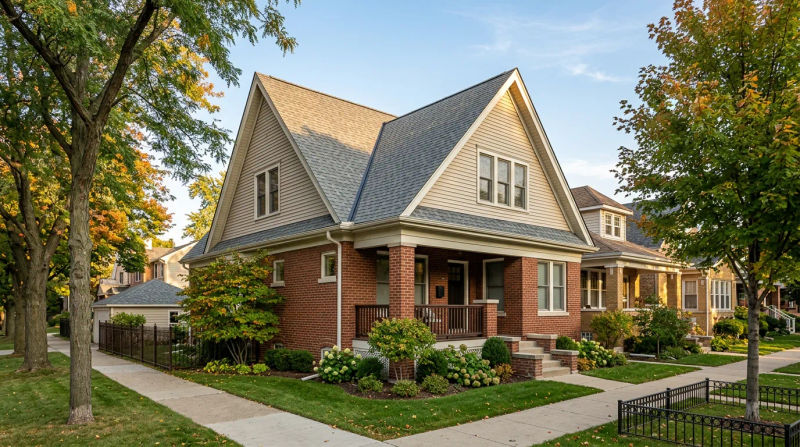
As a Senior Project Manager for Roofs R Us's roofer Co, I’ve seen firsthand what a harsh Chicago winter can do to a roof. But the damage often starts silently, long before the first snowflake falls. This was exactly the situation a homeowner in Arlington Heights faced when they called us this past September. They were proactive, and it made all the difference.
The call came from a classic 1950s ranch-style home, the kind that defines many of Chicago's post-war suburbs. The owner had noticed something alarming the previous winter: frost forming on the nails and sheathing inside their attic. They wisely understood this was a red flag for a bigger problem and wanted to get ahead of it. Their goal was simple: improve attic airflow before cold season to prevent a repeat of the issue. They knew that escalating moisture could lead to mold, wood rot, and damaging ice dams. They called Roofs R Us's roofer Co looking for an expert diagnosis and a permanent solution.
The Assessment
When I arrived for the inspection, the house looked great from the curb. The roof shingles were in decent shape, but my 15 years of experience have taught me that the real story is often hidden in the attic. As soon as I popped the hatch, I could feel the stagnant, slightly humid air - a clear sign of poor ventilation.
The home’s original construction featured only a few small, static "turtle" vents near the roof's peak. For intake, it had minimal soffit vents, many of which were partially or completely blocked by years of blown-in insulation. This created a classic ventilation imbalance. Hot, moist air from the living space below would rise into the attic and have nowhere to go. The small exhaust vents were simply overwhelmed.
I explained to the homeowner that this was a textbook setup for winter moisture problems. As soon as the outside temperature drops, that trapped, humid air condenses on the coldest surfaces - the roof deck, rafters, and nails - just like a cold glass of water on a summer day. This was the source of the frost they saw. This is a critical problem we often see, and providing an effective attic moisture solution Chicago winter is a core part of our expertise at Roofs R Us's roofer Co.
My inspection confirmed the following issues:
- Inadequate Exhaust: The existing static vents provided less than half of the necessary Net Free Area (NFA) for an attic of that size.
- Blocked Intake: The soffit vents were obstructed, meaning almost no fresh, cool air could enter the attic to push the warm, moist air out.
- Compacted Insulation: In areas near the soffits, moisture had begun to compact the insulation, reducing its R-value and effectiveness.
- Early Signs of Staining: Faint water staining was visible on some of the roof rafters, indicating a chronic, long-term moisture issue.
This wasn't just a comfort issue; it was a threat to the structural integrity of their roof and home. The stage was set for a comprehensive ventilation overhaul.
Our Solution
Based on my assessment, I designed a complete ventilation system upgrade. This project would serve as a perfect ridge vent and intake balancing case study. The goal wasn't just to add more vents, but to create a balanced, passive system where intake airflow at the eaves perfectly matched exhaust airflow at the peak.
The Roofs R Us's roofer Co plan involved a two-pronged approach executed by our specialized 3-person crew over two days:
1. Upgrading the Exhaust System: First, we removed the old, inefficient turtle vents and patched the openings, ensuring a seamless, watertight seal. Then, our crew carefully measured and cut a continuous slot along the entire peak of the roof's ridge. This is the most critical step in a ridge vent installation. We used specialized cutting guides to ensure a perfectly straight line without compromising the roof's structural integrity.
We then installed a GAF Cobra® SnowCountry® ridge vent. We recommend this shingle-over ridge vent in the Chicago area because its internal baffle provides exceptional weather protection, preventing wind-driven rain and snow from entering the attic while still allowing maximum airflow.
2. Re-establishing Balanced Intake: An upgraded exhaust vent is useless without matching intake. Our crew went to work on the soffits. They pulled back the insulation at the eaves and installed insulation baffles. These simple but crucial components create a clear channel for air to flow from the soffit into the attic without being blocked by insulation.
Next, we inspected the soffit vents themselves. We cleared all existing vents of debris and paint. In one section where intake was still insufficient, we installed additional continuous soffit vents to ensure the total intake NFA matched the new ridge vent's exhaust NFA. This 50/50 balance is the key to a properly functioning attic.
The entire process was managed with the professionalism homeowners expect from Roofs R Us's roofer Co. We laid down tarps to protect all landscaping and siding, maintained a clean and organized worksite, and performed a magnetic sweep of the entire property to collect any stray nails upon completion.
The Results
Immediately upon completion, the difference was noticeable. Even on a calm day, you could feel a slight, consistent draft of air moving from the soffits toward the ridge - the sign of a healthy, breathing attic. The homeowner was thrilled with the efficiency and professionalism of our crew.
The long-term results are even more significant:
- A Dry, Healthy Attic: The new, balanced system continuously flushes out warm, moist air, preventing condensation and frost buildup. The risk of mold, mildew, and wood rot has been virtually eliminated.
- Prevention of Ice Dams: By keeping the roof deck temperature closer to the outdoor ambient temperature, the new ventilation system drastically reduces the likelihood of snow melting and refreezing at the eaves, which is the primary cause of destructive ice dams.
- Increased Energy Efficiency: The insulation is no longer being compromised by moisture, allowing it to perform at its maximum R-value. This helps reduce heat loss in the winter and heat gain in the summer, leading to potential energy savings.
- Extended Roof Lifespan: By keeping the roof deck dry and cool, we’ve helped extend the life of the existing shingles, which can be prematurely aged by excessive heat and moisture from below.
Most importantly, the homeowner has peace of mind. They no longer have to worry about what’s happening in their attic every time the temperature plummets. They invested in a permanent solution that protects their biggest asset. This project in Arlington Heights is a prime example of how a proactive approach in the fall can safeguard a home for many winters to come.
Ready for your own Roofs R Us's roofer Co experience? Contact us today for a free inspection.